
Not one more acre
New Zealand has a reputation for “the best race relations in the world.” This essay looks beyond that myth to the conditions that led to the 1975 Māori Land March.

This is a stand-alone essay that also constitutes part 11 of a chronological essay series on New Zealand culture.
Whatungarongaro te tangata
toitū te whenuaMan comes and goes
The land remains-Maori whakatauki / proverb
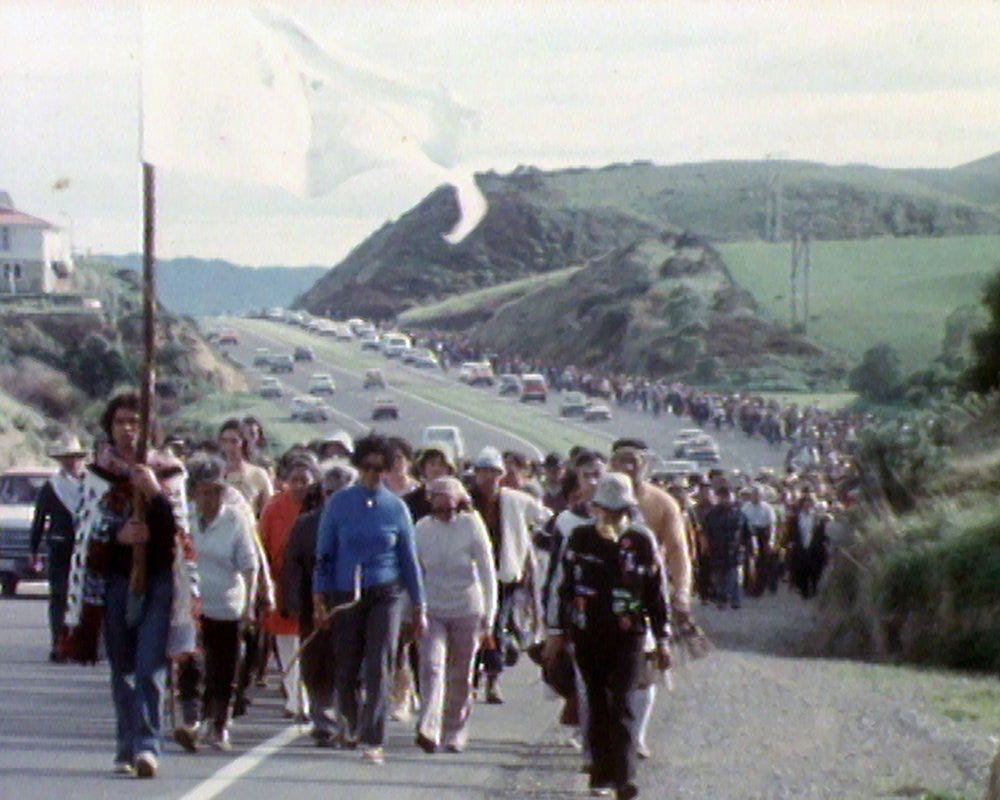
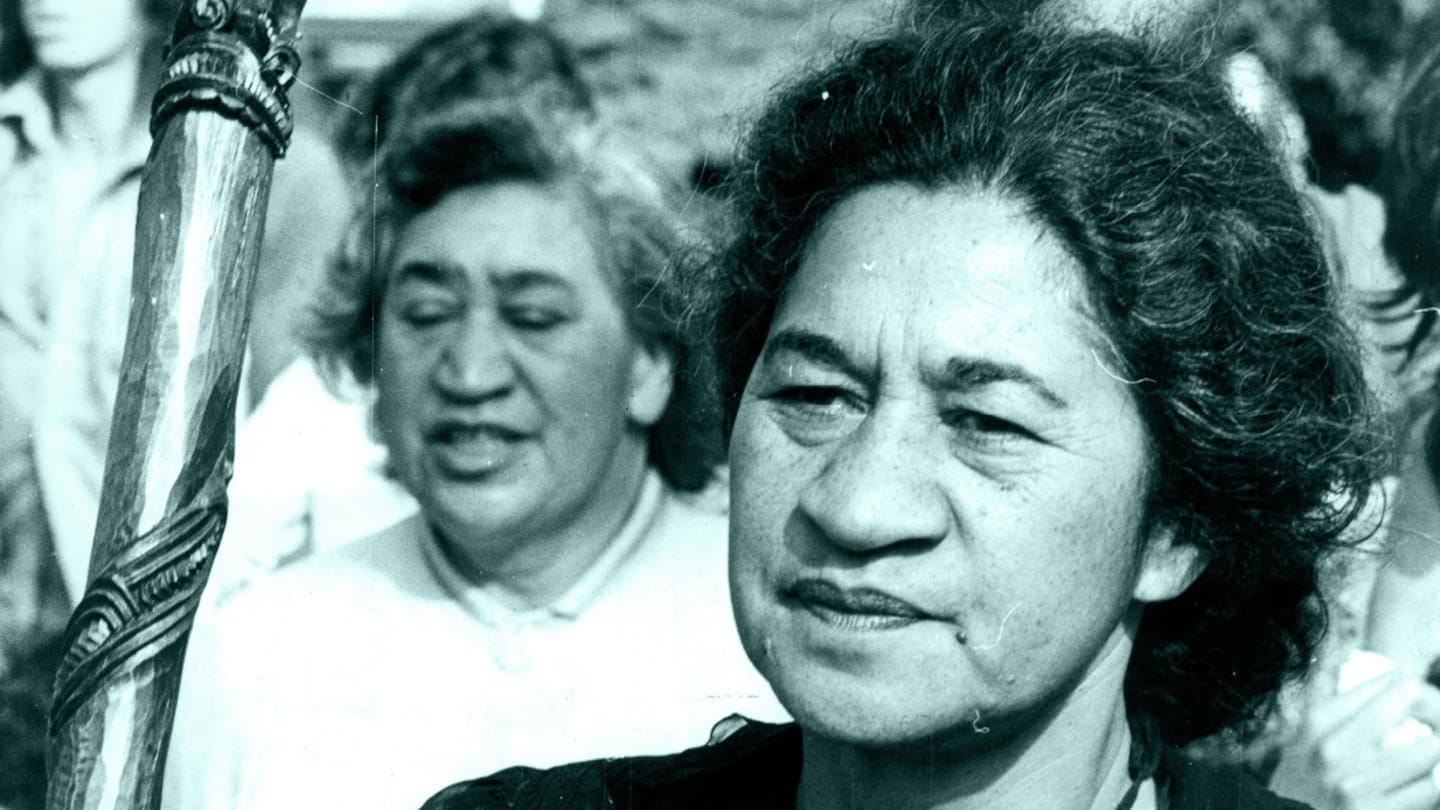
The 1975 Māori Land March led by Dame Whina Cooper was arguably the most moving large scale protest action of late twentieth century New Zealand. Organised by Te Rōpū o te Matakite (‘those with foresight’) and Ngā Tamatoa, the thousand kilometre hikoi/march aimed to preserve and protect the last 2 million acres of land still in Māori hands. Participants spent one month walking the length of the north island, stopping at 25 marae to gather with local iwi and collect support for Cooper’s Memorial of Right. The document demanded an end to land confiscation; the slogan of the March was “not one more acre.” When the hikoi reached parliament, there were 5,000 marching and 60,000 signatures on Cooper’s petition.
A documentary about the march, Te Matakite o Aotearoa (1975), shows activist Eva Rickard explaining the Māori relationship to land, by explaining why the word whenua means both ‘land’ and ‘placenta’:
Firstly, whenua is land. Secondly, whenua is the placenta within the mother that feeds the child before birth.
And when it is born, this whenua is treated with respect, dignity, and taken to a place in the earth and dedicated to Papatūānuku, the Earth mother of the Māori people. And there, it will nurture the child. You know: our food and living come from the earth – and … this whenua of the child stays and says: This is your little bit of land. No matter where you wander in the world, I will be here. And at the end of your days you can come back, and this is your Papakāinga, and … I will receive you in death. This is the spiritual significance, I believe, of the land to the Māori people.
Over a century of colonisation had alienated Māori from most of their land while trying to convert the Māori view of land from from one of belonging and collective guardianship, to land as a resource to be exploited and individually possessed.
In the 1830s, New Zealand was comprised of a few small European settlements in an “ocean of Māori land.” The signing of the Treaty of Waitangi by Māori and the Crown in 1840 was a pivotal moment; it declared for the Crown the “right of pre-emption” (first dibs) on land that Māori “may be disposed to alienate.” This enabled the Crown to set land prices, and from 1846-53, the Crown bought 13.2 million hectares (almost half the country’s land area) for an average of less than half a penny per acre. Promises to reserve land for Māori residence and infrastructure went unfulfilled.
By 1844, the Crown had spent ₤4,000 buying land from Māori and earned ₤40,000 selling it to settlers, with profits funding further immigration and settlement.
Some Māori responded by building networks of iwi and hapu who refused to sell land, and Waikato iwi formed the Kingitanga or king movement. Seeing the power of the British Crown, they concluded that Māori would be empowered in their relations with British if they, too, were united under a monarch. Yet when Waikato chief Te Wherowhero was recognised ceremoniously as the first Māori king, settlers saw this as subversive. Governor George Grey claimed the king movement threatened Crown authority and sent imperial troops into the Waikato and Bay of Plenty to confiscate nearly 1.4 million hectares.
The Crown gained military supremacy in the period to follow, generally referred to as the era of the New Zealand Wars or Land Wars. By the mid-1860s, there were 10,000 imperial troops in the country, 10,000 local soldiers, 2,000 men recruited from Australia and five warships. The New Zealand Company and 1860s gold rush drew more settlers. Europeans outnumbered Māori from 1858 and by 1870, the non-Māori population exceeded 250 thousand.
Military supremacy enabled the settler parliament to impose new laws, including the 1862 Native Lands Act, which established the Native Land Court in 1865. According to historian James Belich, “this notorious institution was designed to destroy Māori communal land tenure and so both facilitate Pakeha land buying and ‘detribalise’ Māori.” Māori were guardians (kaitiaki) of land and belonged to it along with iwi and hapu according to whakapapa or heritage; the Native Land Court functioned to transition Māori land from this system of collective guardianship to one of individual legal title, making land easier to alienate, buy, sell, and transfer to settler society. It turned land confiscation from a military to a bureaucratic exercise. Whina Cooper became a defender of Māori land partly due to the impacts of the Native Land Court on her own rohe /homeland and iwi.
Following the Treaty, Land Wars, and formation of the Native Land Court came the ‘great migration’ of 1871-85. New Zealand’s provincial governments had already been using land and land revenue to bring new settlers to New Zealand, with the offer of free passage or land grants. This escalated in the 1870s when colonial treasurer Julius Vogel increased immigration with free or assisted passages offered by the New Zealand government. In 1874 there was a net addition of more than 38,000 immigrants, the largest annual increase until 2002. Three-quarters sailed directly from the United Kingdom, almost half with New Zealand government assistance.
Between 1840 and 1900, Māori went from being guardians of about 26.8 million hectares to 2 million hectares or 7.5 per cent of New Zealand’s total land area. By 1900, the Māori population was below 40 thousand and Māori were considered a ‘dying race’.
Land confiscation continued during the world wars, which is partly why some Māori were vocal opponents of conscription. In the Waikato, princess Te Puea Herangi (granddaughter of the second Māori king) opposed conscription in light of the Waikato invasion and land theft. She famously declared: “They tell us to fight for king and country. Well, that’s all right. We’ve got a king. But we haven’t got a country. That’s been taken off us.”
Tūhoe leader and prophet Rua Kēnana also opposed conscription. Land confiscations in the nineteenth century had severed Tūhoe from fertile lands and kaimoana (seafood), so Kēnana had built a self-sufficient community at Maungapōhatu in the Ureweras in 1907. The government was suspicious — the infamous 1907 Tohunga Suppression Act was aimed mainly at Kēnana. For his opposition to conscription he was accused of sedition and harassed by government. In 1916, 57 armed police invaded Maungapōhatu to arrest him — they also shot and killed his son. Kēnana’s 47-day Supreme Court was one of the longest in New Zealand history; it found him not guilty of sedition but guilty of resisting arrest. He was sentenced to one year hard labour followed by 18 months’ imprisonment at Mount Eden, during which time his community at Maungapōhatu was dismantled.
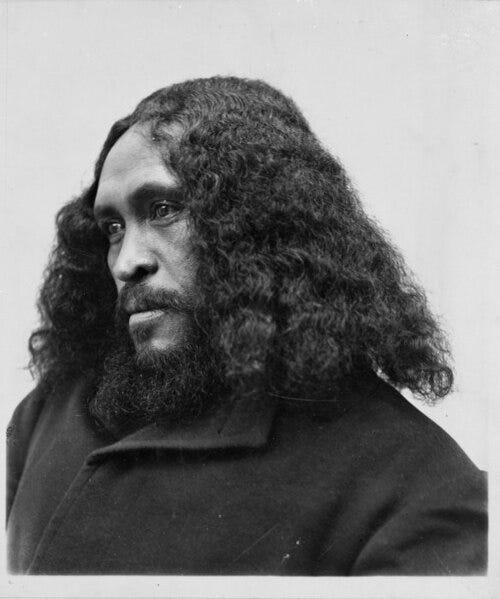
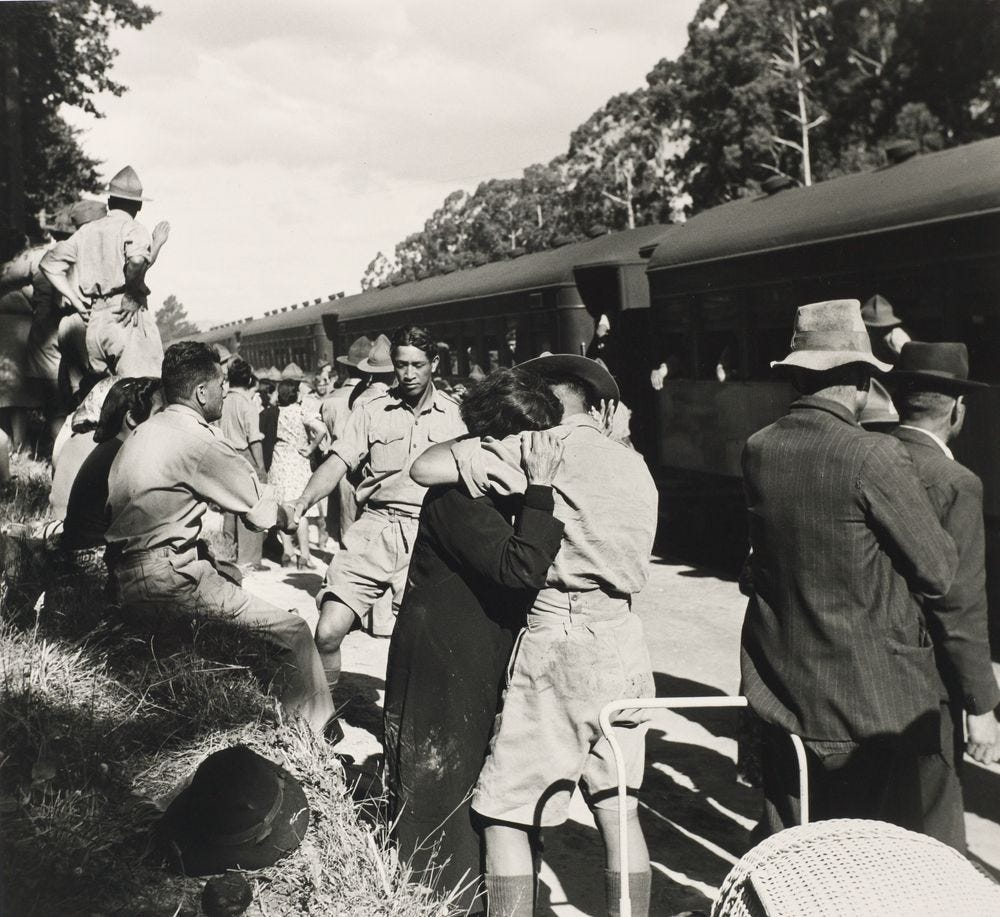
Some Māori actively participated in the world wars believing their contribution would improve race relations. They soon became disillusioned. In the postwar period, Māori underwent among the world’s fastest urban migrations. Historian Michael King explains:
The magnitude of the shift can be better appreciated by consideration of statistics for an individual city. In 1935 … there were only 1766 Maoris in the whole of Auckland, any many of those were recent arrivals. By 1945 there were 5000, and by 1951 … over 8000.
The shift was initially triggered by the Māori War Effort Organisation that opened labouring and manufacturing jobs not previously available to Māori. Urbanisation continued through the 1950s when New Zealand was considered the land of milk and honey; the country was still a small-town society but boasted the world’s second highest standard of living. The booming economy spelled labour shortages and a need for workers. A desire for cheap labour in the cities, combined with ongoing land confiscation and government relocation programs meant while the Māori population was 83% rural in 1926, it was almost 80% urban by 1986. King summarises: “A combination of a declining rural economy and an expanding urban one produced an inevitable pull towards city life and work.”
Once in the cities, Māori faced new problems. Many urban Pakeha would not accept them as tenants or neighbours. The documentary Stolen Children of Aotearoa (2025) explains that a policy of ‘pepper potting’ (integration) was attempted but led to “virtual segregation” as it failed. Many Pakeha called police on Māori neighbours and surveillance increased. Many Māori were arrested for petty offences. This included children, who became wards of the state and were placed into boarding schools and foster homes where they were all too frequently abused. The largest inquiry ever conducted in New Zealand — the 2018 Royal Commission of Inquiry into Historical Abuse in State Care and in the Care of Faith-based Institutions — concerns this history.
Meanwhile, land confiscation continued. The Māori Affairs Amendment Act (MAAA) of 1967 is known as the “last great land grab”: it enabled government agents (called ‘improvement officers’) to investigate land to determine if it was being used ‘productively’ for farming, mining, or similar. If not, it was deemed ‘surplus’ or wasteland, making it easier to alienate.
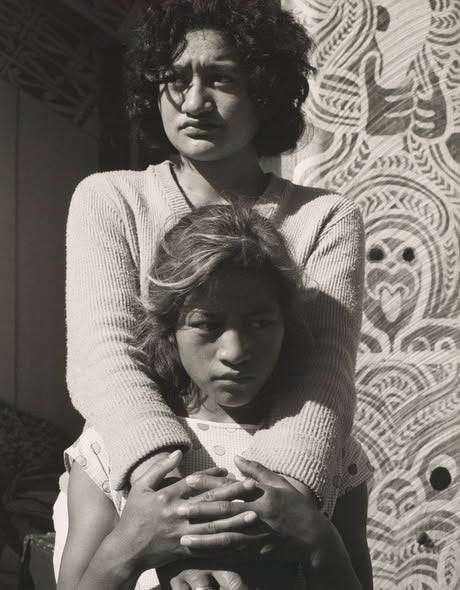
In response to the MAAA and as a result of urbanisation, urban protest groups formed, using demonstrations, picketing, petitions, press releases and television appearances to advance Māori interests. Whina Cooper was the first national president of the Māori Women’s Welfare League, which held its first conference in 1951; Ngā Tamatoa (the Young Warriors) formed in late 1960s Auckland, where Māori numbers were greatest.* This is the context to the 1975 Land March.
Joe Hawke was a participant in the march, and two years later he led an occupation at Takaparawhau/ Bastion Point with help from Ngā Tamatoa. Local iwi Ngāti Whātua opposed the confiscation and sale of land there for private development. The occupation lasted 506 days and was broken up on May 25, 1978, by over 500 police officers and army personnel who circled the site. Hawke reflected: “It’s to their shame that they did it that way … they could have done it an easier, less harassing way. But they chose not to do that.” Police arrested 222 protestors while they sang waiata and hymns. The courts dismissed most charges of trespass laid against protestors. By 1988, the government agreed to the Waitangi Tribunal recommendation that Takaparawhā/ Bastion Point be returned to Ngāti Whātua.
Pacific islanders were also affected by systemic racism, especially the Samoans and Tongans encouraged to join New Zealand’s workforce and address labour shortages. Thousands travelled here in the mid-twentieth century on visitors’ permits, finding jobs so plentiful that immigration laws weren’t enforced. The Auckland suburbs of Ponsonby and Grey Lynn became known as “little Polynesia.”
When the economy declined in the late sixties and seventies due to a collapse in wool prices and oil shocks, New Zealand’s economy tightened and unemployment increased. Scapegoating resulted, especially of overstayers — and though most overstayers at the time were from Europe or the United States, Polynesians were targeted.
This led to the Dawn Raids. From 1974-9, police raided Polynesian homes, typically before dawn and accompanied by police dogs. They would block potential escape routes before demanding entry or breaking in, often bursting into bedrooms. The tactic was humiliating. People were roughly treated while still waking up, barefoot, in pyjamas. Police also carried out random documentation checks at schools, workplaces and on the streets, on people who appeared Polynesian. Hundreds of Polynesians were arrested and deported.
In 1971 the Polynesian Panthers was formed, taking inspiration from San Francisco’s Black Panthers. The group sought to “educate to liberate,” providing food banks, housing and legal aid. They actively supported the Land March and Bastion Point protests, and then-lawyer and future prime minister David Lange helped produce their legal aid pamphlets. The Panthers also turned the tables on police, monitoring police activity through their Police Investigation Group (PIG Patrol). In 1976, they even conducted “dawn raids” of their own, as founder Will ‘llolahia recalls:
We decided to ‘dawn raid’ the ministers. We gave them the full [experience] – outside the house, we had the lights blaring, in our black gears and loudhailer, and [we’d] say: “We are members of the Aotearoa Liberation Movement. You have twenty-four hours to prove that you are rightfully allowed to stay in this country.”
One raid on immigration minister Frank Gill was broadcast on live radio:
I had a friend who was working for Radio Hauraki at the time, who … rang up the minister on air, asking him what was happening. He said, on live radio: “How dare these people come at this ungodly hour.” ... That was the point … I think it took … two and a half weeks. And there were no more Dawn Raids.
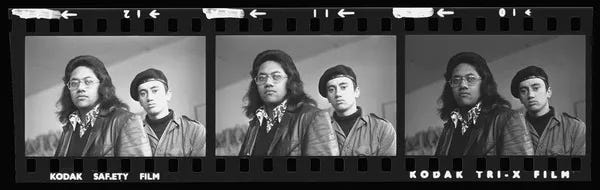
The injustice of the raids ran deep. During WWI, New Zealand’s first action was to invade Samoa. Troops brought influenza and the resulting epidemic wiped out almost one quarter of the Samoan population — this being one of the worst cultural and population decimations per capita in the world. Samoa’s Mau Movement was established on the graves of those who died.
Falema’i Lesa was arrested during the Dawn Raids while working as a kitchenhand In 1976. She and her lawyers fought back, taking the New Zealand government to court. They argued that since New Zealand had colonised Samoa, Samoans who lived under the New Zealand administration were New Zealand citizens. Lesa lost her case at the High Court and the New Zealand Court of Appeal — but won at the Privy Council in London. In 1982, the Council ruled that every Samoan born in Samoa between 1924-49 was a New Zealand citizen, as were their children. The New Zealand government arranged for this ruling to be reversed the same year, substituting it with residential qualifications for the 40 thousand Samoans living in the country.
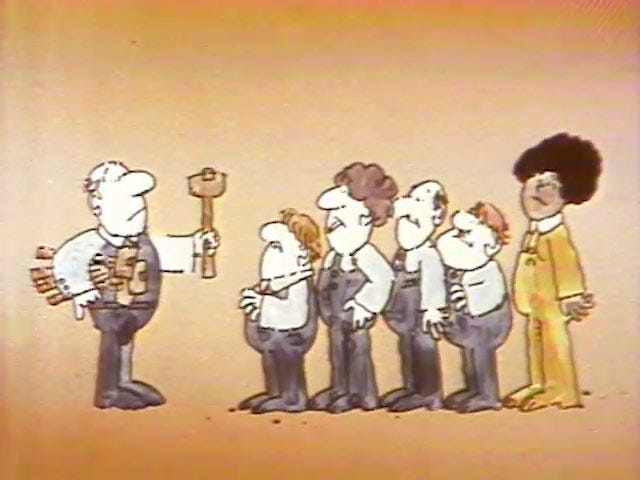
The Kirk government that instigated the Dawn Raids ended them within a year, but the subsequent Robert Muldoon National government revived and escalated them. The party was accused of leveraging fears about immigration to win power: their election campaign advertisements included racist caricatures of Pacific islanders, framing them as a threat to employment.
This was the context of race relations in New Zealand prior to the 1981 Springbok protests. For many, those protests constitute evidence that New Zealanders are a righteous and upstanding people: we may be laid back and easy-going, but when it matters, we do the right thing. For Māori and Pasifika, the Springbok protests tell another story. For Māori, they were the continuation of a century of anti-racist activism. For the Polynesian Panthers, the Springbok protests weren’t about objecting to another nation’s brutality from a moral high ground. They were about preventing the escalation of a domestic problem by insisting New Zealanders express at least a minimal standard of anti-racism by foregoing some rugby to reject apartheid. This will be the topic of the next essay.
Sections on the Native Land Court written with much help from Season 2, Episode 6 of the ‘Aotearoa History show’ podcast produced by Radio New Zealand. The episode is titled ‘Native Land Court’.
*In 1972, Ngā Tamatoa presented a Māori Language Petition (Te Petihana Reo Māori) with 30,000 signatures, to parliament. It demanded te reo Māori be taught in schools and led to Māori Language Week and the eventual recognition of te reo as an official language.
Fantastic article. Reposted on the Suppressed Histories page.
It took me down a whole series of searches on the wonderful Eva Rickard and Annette Sykes.